
Similes for addiction help writers explain a difficult experience through familiar comparisons. A well chosen simile about addiction can show how addiction feels emotionally physically and mentally in a way that plain language often cannot. From creative writing and poetry to essays speeches and classroom assignments addiction similes make descriptions more vivid and easier to understand.
This guide brings together thoughtful examples of similes for addiction along with simple explanations practical examples and expert writing tips. You’ll learn how to choose the right comparison avoid common mistakes and use figurative language that feels natural respectful and meaningful.
Quick Answer
Similes for addiction compare addiction to something else by using words like as or like. They help readers picture the grip craving or emotional impact of addiction through familiar images. Examples include like a vine wrapping around a tree and as hard to escape as quicksand. Strong similes create emotion without making the meaning confusing.
Table Of Contents
- What Are Similes for Addiction
- Why Writers Use Similes for Addiction
- Best Similes for Addiction With Meanings and Examples
- Similes for Different Situations
- Tips for Choosing the Right Simile
What Are Similes For Addiction
A simile is a figure of speech that compares two different things by using like or as. Instead of describing addiction in a direct way a simile paints a picture that helps readers understand the experience on a deeper level.
For example.
Addiction clung to him like a shadow that never disappeared.
The comparison does more than say addiction stayed with someone. It creates an image of something that follows every step and refuses to leave.
Unlike metaphors similes make the comparison clear by using connecting words. That makes them easier to understand for readers of all ages.
Why Writers Use Similes For Addiction
Writing about addiction isn’t easy. The emotions are often intense and difficult to describe. Similes bridge that gap by turning abstract feelings into images people already understand.
Writers use similes for addiction to:
- Show emotional struggles in a relatable way.
- Make stories and essays more engaging.
- Help readers connect with characters.
- Create memorable descriptions.
- Add depth without using complicated language.
A thoughtful comparison can say more in one sentence than an entire paragraph of plain explanation.
Best Similes For Addiction With Meanings And Examples
Adding subheadings is a smart move. A long list of 40 to 50 similes under one H2 is difficult to scan and can reduce engagement. Grouping them by theme improves readability, helps readers find what they need faster, and creates stronger semantic relevance for SEO.
A structure like this works well.
Best Similes For Addiction With Meanings And Examples
Similes That Show Feeling Trapped
These similes for addiction describe the feeling of being stuck or unable to break free.
Include examples like:
- Like a spider caught in its own web.
- Like quicksand pulling deeper with every move.
- Like a chain around the ankle.
- Like a cage with an open door.
Similes That Show Loss Of Control
These addiction similes highlight how addiction can take over thoughts actions and decisions.
Include examples like:
- Like a puppet controlled by invisible strings.
- Like a broken compass.
- Like a runaway train.
- Like a leaf carried by the wind.
Similes That Show Constant Cravings
These examples of similes for addiction capture the repeated urge to return to harmful habits.
Include examples like:
- Like a magnet pulling metal.
- Like a moth flying toward a flame.
- Like waves crashing against the shore.
- Like a dog chasing its tail.
Similes That Show Emotional Struggles
These comparisons focus on the emotional weight that addiction can bring.
Include examples like:
- Like carrying a heavy backpack uphill.
- Like walking through thick fog.
- Like sinking in deep water.
- Like a storm that refuses to pass.
Similes That Show Addiction Growing Over Time
Some similes for addiction emphasize that addiction often develops gradually instead of overnight.
Include examples like:
- Like a vine wrapping around a tree.
- Like roots spreading beneath the ground.
- Like rust eating away at metal.
- Like cracks spreading across glass.
Similes That Show Endless Cycles
These comparisons describe the repetitive nature of addiction.
Include examples like:
- Like running on a treadmill.
- Like a wheel that never stops turning.
- Like the changing tides.
- Like an endless maze.
Similes That Show Hope And Recovery
Not every comparison should focus on struggle. These similes highlight healing and new beginnings.
Include examples like:
- Like the first sunrise after a long night.
- Like finding solid ground after rough seas.
- Like rain bringing life to dry soil.
- Like a tree growing new branches.
This structure is stronger for SEO because each subheading targets a specific user intent, improves page scannability, increases the chances of appearing in AI Overviews, and keeps readers engaged without making the section feel like one long list.
How To Choose The Right Similes For Addiction
Not every comparison works in every situation. The best similes for addiction depend on your audience your purpose and the tone of your writing.
Keep these ideas in mind.
- Choose images people recognize right away.
- Match the emotion you want readers to feel.
- Keep comparisons respectful and realistic.
- Avoid dramatic images that distract from your message.
- Make sure the simile supports the main idea instead of replacing it.
A strong simile should make your writing clearer not more complicated.
Expert Writing Tip
Many writers use the same comparisons again and again. Phrases like like a prison or like a chain are familiar but they can lose their impact through overuse.
Try mixing common and fresh imagery. Nature weather journeys and everyday objects often create stronger mental pictures because readers can connect with them instantly. The goal isn’t to sound clever. It’s to help readers see the experience through a new lens while keeping the language clear and natural.
Similes For Addiction In Different Situations
The best similes for addiction depend on your purpose. A comparison that works well in a novel might feel too dramatic in an academic essay. A classroom assignment needs simple language while a poem can lean into vivid imagery.
Below are different types of addiction similes with meanings and examples that fit a wide range of writing styles.
Similes For Drug Addiction
Drug addiction often changes a person’s thoughts emotions and daily life. These similes for addiction show how powerful that struggle can become.
| Simile | Meaning | Example |
|---|---|---|
| Like a fish caught on a hook. | Unable to escape after getting trapped. | He was like a fish caught on a hook struggling but never getting free. |
| Like a river pulling everything downstream. | Constant force that is hard to resist. | Drug addiction swept through his life like a river pulling everything downstream. |
| Like a cage with an open door that still feels locked. | Freedom exists but feels impossible to reach. | Recovery seemed like standing inside a cage with an open door that he could not bring himself to leave. |
| Like a candle burning from both ends. | Losing strength very quickly. | His health faded like a candle burning from both ends. |
| Like falling into a deep pit. | Slipping into a serious problem. | Addiction felt like falling into a deep pit with no easy way out. |
Similes For Alcohol Addiction
These similes about addiction highlight the gradual and repetitive nature of alcohol dependence.
| Simile | Meaning | Example |
|---|---|---|
| Like chasing a fading sunset. | Looking for something that can never truly satisfy. | Every drink felt like chasing a fading sunset. |
| Like pouring water into a bucket with holes. | Trying to fill an empty feeling without success. | Drinking became like pouring water into a bucket with holes. |
| Like running on a treadmill. | Constant effort without real progress. | He lived like someone running on a treadmill never moving forward. |
| Like carrying a leaking bucket. | Constant loss despite repeated effort. | Every promise to quit felt like carrying a leaking bucket. |
| Like a wheel that never stops turning. | A repeating cycle. | Alcohol addiction became like a wheel that never stopped turning. |
Similes For Social Media Addiction
Modern life has created new forms of addiction. These comparisons describe habits that many readers recognize.
| Simile | Meaning | Example |
|---|---|---|
| Like a bee drawn to flowers. | Constant attraction. | She reached for her phone like a bee drawn to flowers. |
| Like checking the mailbox every minute. | Constant expectation. | He refreshed the app like someone checking the mailbox every minute. |
| Like a magnet pulling iron. | Hard to resist. | Notifications pulled her attention like a magnet pulling iron. |
| Like a child chasing bubbles. | Endless pursuit of something temporary. | He scrolled like a child chasing bubbles that disappeared as soon as they appeared. |
| Like sitting beside a slot machine. | Hoping every click brings a reward. | Social media became like sitting beside a slot machine waiting for the next win. |
Similes For Love Addiction
Love can become unhealthy when it turns into obsession. These examples of similes for addiction describe emotional dependence with care.
- Like a flower reaching for sunlight.
- Like ivy climbing every wall it can find.
- Like a compass that always points in one direction.
- Like a kite tied to one string.
- Like an echo that never fades.
Examples
- She followed him like ivy climbing every wall it could reach.
- His thoughts returned to her like a compass pointing north.
- Their unhealthy attachment felt like an echo that refused to disappear.
Similes For Gambling Addiction
Gambling addiction often revolves around hope risk and repeating the same behavior.
| Simile | Meaning | Example |
|---|---|---|
| Like chasing the horizon. | Pursuing something impossible to catch. | Winning felt like chasing the horizon. |
| Like throwing pebbles into the ocean. | Endless effort with little result. | His money disappeared like pebbles thrown into the ocean. |
| Like climbing a slippery hill. | Progress never lasts. | Recovery felt like climbing a slippery hill. |
| Like reaching for smoke. | Trying to hold something impossible. | Every jackpot seemed like reaching for smoke. |
| Like spinning a weather vane in the wind. | Constant uncertainty. | His future turned like a weather vane in the wind. |
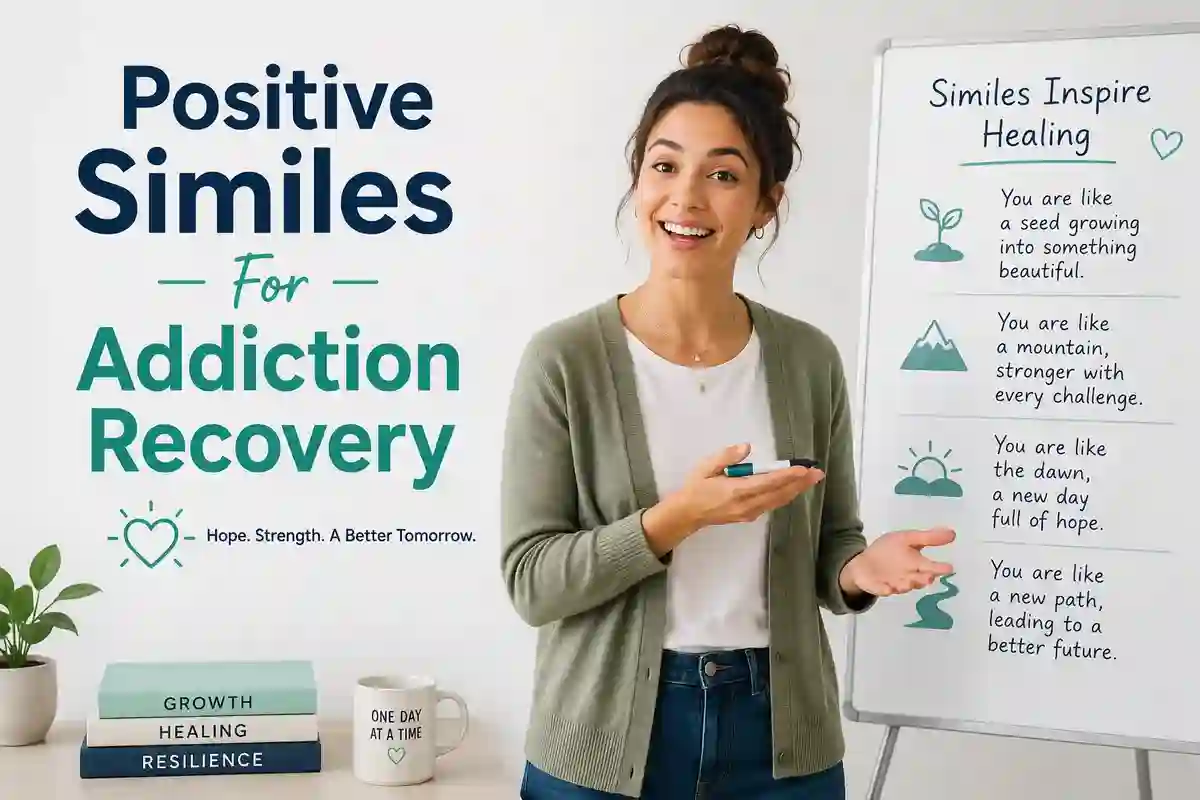
Positive Similes For Addiction Recovery
Not every comparison should focus on struggle. Recovery deserves hopeful imagery that reflects growth and resilience.
| Simile | Meaning | Example |
|---|---|---|
| Like the first sunrise after a long night. | Hope returning. | Recovery felt like the first sunrise after a long night. |
| Like a tree growing new branches. | Healing and fresh beginnings. | She rebuilt her life like a tree growing new branches. |
| Like rain bringing life to dry soil. | Renewal and strength. | Support arrived like rain bringing life to dry soil. |
| Like opening a window after years indoors. | Freedom and clarity. | Sobriety felt like opening a window after years indoors. |
| Like finding solid ground after rough seas. | Stability after hardship. | He finally felt like someone finding solid ground after rough seas. |
Similes For Addiction In Literature
Many authors rely on figurative language to express emotional struggles. Instead of explaining addiction directly they create images that stay with readers long after the story ends.
Strong literary similes for addiction often draw inspiration from nature travel storms fire darkness and captivity. These images connect with readers because they represent experiences that almost everyone understands.
Examples include.
- Like roots digging deeper into the earth.
- Like smoke filling every corner of a room.
- Like winter refusing to give way to spring.
- Like a ship drifting without a captain.
- Like a cracked mirror reflecting a broken life.
These comparisons add emotional depth while keeping the writing vivid and memorable.
Similes For Addiction In Student Writing
Students often need simple comparisons for essays speeches and creative assignments. Clear language usually makes a stronger impression than complicated imagery.
Good choices include.
- Like being stuck in mud.
- Like carrying a heavy backpack.
- Like walking in circles.
- Like climbing a steep hill.
- Like being caught in a spider web.
These similes are easy to understand and work well for middle school high school and college writing.
Common Mistakes When Using Similes For Addiction
Even a powerful comparison can lose its impact if it feels forced or confusing.
Avoid these common mistakes.
- Comparing addiction to something readers cannot picture.
- Mixing several similes in one sentence.
- Using clichés over and over.
- Choosing comparisons that distract from the main message.
- Using exaggerated images that make the writing feel unrealistic.
Simple comparisons usually leave the strongest impression.
Expert Language Insight
Professional editors look for comparisons that deepen meaning instead of adding decoration.
The strongest similes for addiction help readers understand emotions through familiar experiences. They don’t compete for attention or sound dramatic just for the sake of drama. A clear image that readers instantly recognize will almost always outperform an overly complicated comparison.
Good figurative language invites readers into the experience. Great figurative language stays in their memory long after they’ve finished reading.
Related Figurative Language For Addiction
Learning other figures of speech can make your writing richer and more engaging. While similes for addiction compare two things by using like or as these literary devices create different effects.
| Literary Device | Meaning | Example |
|---|---|---|
| Metaphor | A direct comparison without using like or as. | Addiction became a prison with invisible walls. |
| Analogy | A detailed comparison that explains an idea. | Addiction is like driving with broken brakes because control slowly disappears. |
| Personification | Giving human qualities to nonhuman things. | Addiction whispered promises that it could never keep. |
| Symbolism | Using an object or image to represent a deeper meaning. | A broken chain symbolizes freedom from addiction. |
| Imagery | Descriptive language that appeals to the senses. | The room felt cold silent and empty after he began recovery. |
Using different literary devices keeps your writing fresh while helping readers connect with your message.
Related Words And Literary Terms
If you’re writing about addiction or figurative language these related terms can help expand your vocabulary naturally.
Related Words
- Craving.
- Dependence.
- Habit.
- Obsession.
- Compulsion.
- Recovery.
- Sobriety.
- Temptation.
- Withdrawal.
- Resilience.
- Healing.
- Self control.
Synonyms For Addiction
- Dependence.
- Compulsion.
- Habit.
- Obsession.
- Fixation.
- Craving.
- Reliance.
Antonyms For Addiction
- Freedom.
- Independence.
- Self control.
- Balance.
- Moderation.
- Recovery.
- Sobriety.
Collocations
These word combinations appear naturally in everyday English.
- Addiction recovery.
- Drug addiction.
- Alcohol addiction.
- Gambling addiction.
- Nicotine addiction.
- Behavioral addiction.
- Overcome addiction.
- Break an addiction.
- Develop an addiction.
- Addiction treatment.
Related Idioms
These idioms aren’t direct similes for addiction but they express similar ideas.
- Caught in a trap.
- Fighting an uphill battle.
- Back to square one.
- Lose your grip.
- At a crossroads.
- Break free.
- Turn over a new leaf.
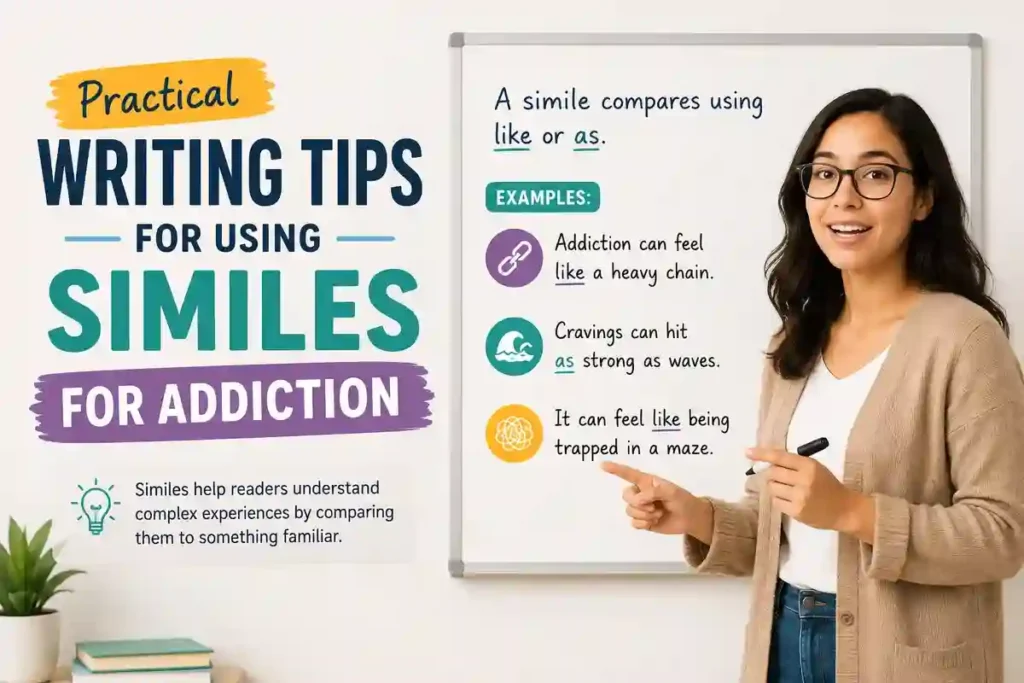
Practical Writing Tips For Using Similes For Addiction
Strong similes make readers stop and picture your words. Weak ones can distract or confuse them.
Keep these tips in mind.
- Choose comparisons readers recognize right away.
- Match the simile to the tone of your writing.
- Use figurative language to support your message instead of replacing it.
- Avoid using too many similes in one paragraph.
- Read your sentence aloud to make sure it sounds natural.
- Keep your comparisons respectful when writing about real people and sensitive topics.
Good writing is like clear glass. Readers should notice the message before they notice the technique.
Frequently Asked Questions
What Is A Simile For Addiction
A simile for addiction compares addiction to another thing by using like or as. It helps readers understand the experience through a familiar image.
What Is The Best Simile For Addiction
There isn’t one perfect simile. A comparison like as hard to escape as quicksand or like a vine wrapping around a tree works well because it clearly shows the feeling of being trapped.
Why Do Writers Use Similes For Addiction
Similes help explain emotions and experiences that are difficult to describe with ordinary language. They make writing more vivid and memorable.
Can I Use Similes For Addiction In Essays
Yes. Similes work well in essays if they support your point and fit the tone of your writing. Avoid overly dramatic comparisons in formal academic work.
Are Similes Better Than Metaphors
Both are useful. Similes make the comparison clear by using like or as. Metaphors create a stronger direct comparison without those words.
Can Students Use Similes For Addiction
Yes. Students often use similes in creative writing speeches literature assignments and descriptive essays.
What Makes A Good Simile About Addiction
A good simile is clear relevant and easy to picture. It should strengthen your message instead of making readers stop and figure out the meaning.
How Many Similes Should I Use In One Piece Of Writing
Quality matters more than quantity. A few well chosen similes usually have more impact than filling every paragraph with comparisons.
Are Similes For Addiction Appropriate In Creative Writing
Yes. Novels poems short stories and personal narratives often use similes for addiction to add emotional depth and help readers connect with characters.
Can Similes Help Improve My Writing
Absolutely. Strong similes make abstract ideas easier to understand while making your writing more engaging and memorable.
Conclusion
The best similes for addiction do more than compare one thing to another. They help readers understand complex emotions through familiar images that stay in their minds long after they’ve finished reading.
From simple classroom assignments to novels speeches and blog posts the right comparison can transform ordinary writing into something vivid and meaningful. Focus on clarity authenticity and purpose instead of trying to sound dramatic. A thoughtful simile creates a stronger connection with readers because it helps them see the experience instead of simply reading about it.
Use the examples and tips in this guide as inspiration then create your own comparisons that fit your message and audience. The most effective writing always sounds honest natural and easy to understand.

Founding Editor
Maya spent six years as a copyeditor at a regional newspaper before starting Grammist, which is where the “answer first” format came from: newsroom style guides don’t have room for a preamble.
She writes and reviews most of the word-pair and spelling entries, and has final say on anything that goes out under the Grammist name.