
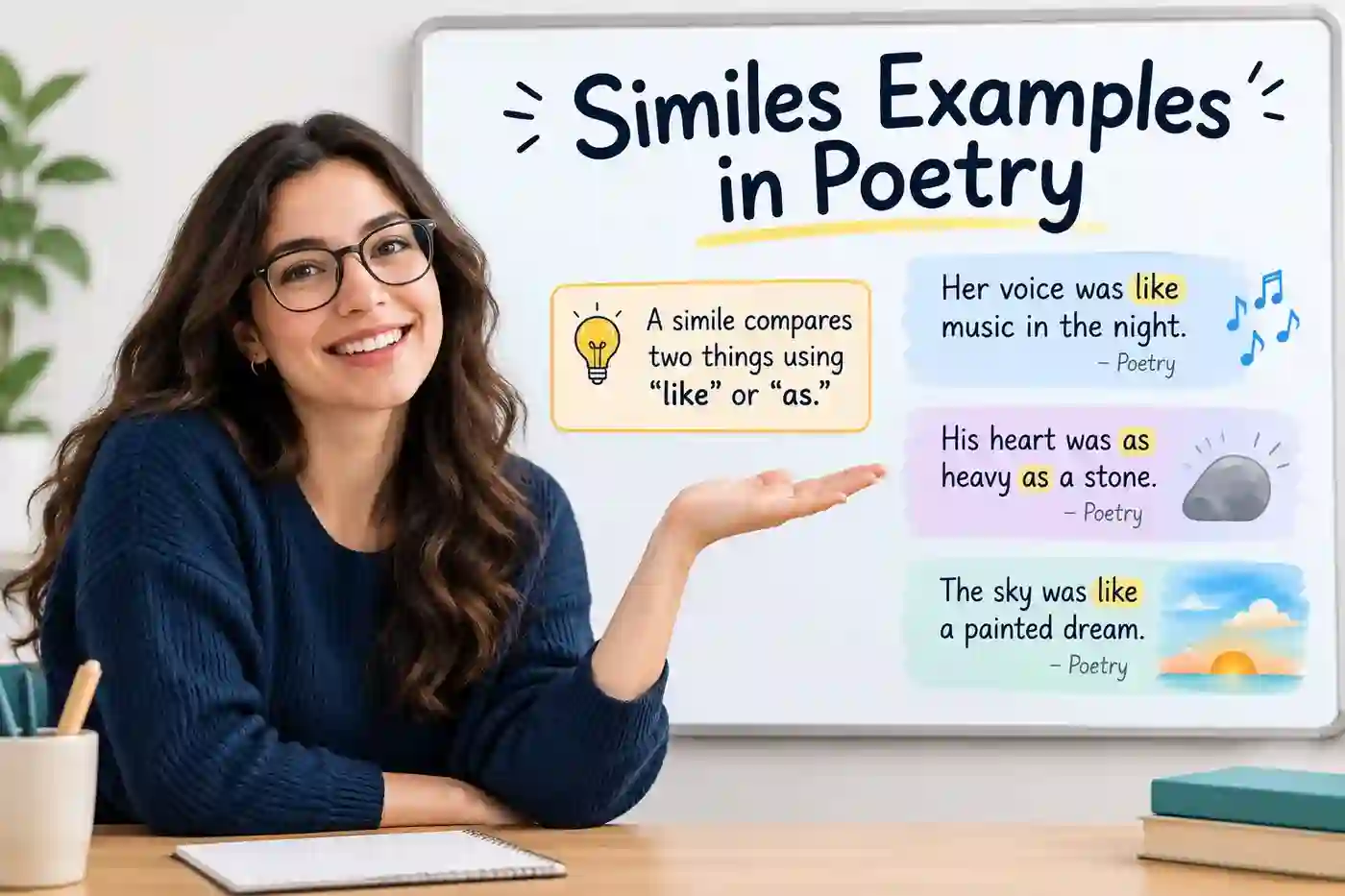
Similes examples in poetry has a special way of turning simple ideas into vivid pictures. One of the easiest and most powerful tools poets use is the simile. A well written simile helps readers see hear feel or imagine something in a fresh way. It takes an ordinary thought and paints it with colorful language that stays in the reader’s mind.
If you’ve searched for similes examples in poetry you probably want more than a simple definition. You want to understand how similes work why poets use them and how to recognize or write them with confidence.
This guide explains everything in plain English. You’ll learn what similes examples in poetry are how they differ from metaphors why they matter in poetry and how to spot them in famous poems and everyday writing. You’ll also find plenty of original examples and practical tips that make the concept easy to remember.
Quick Answer
A simile is a figure of speech that compares two different things by using the words like or as. In poetry similes create vivid images strengthen emotions and help readers connect with ideas through familiar comparisons. For example Her smile shone like the morning sun compares a smile to sunshine to express warmth and brightness.
Table of Contents For Similes Examples In Poetry
- What Are Similes in Poetry
- Why Do Poets Use Similes
- How Similes Work in Poetry
- Similes vs Metaphors
- Key Features of Similes
- Original Similes Examples in Poetry
- Famous Similes in Poetry
- Common Mistakes
- Tips for Writing Better Similes
- Frequently Asked Questions
- Conclusion
What Are Similes in Poetry
A simile is a literary device that compares one thing with another by using the words like or as. The goal is to make an idea clearer stronger or more memorable.
Instead of saying someone is happy a poet might write that they were as cheerful as the first bird at sunrise. That comparison creates a picture readers can easily imagine.
Poets use similes to make emotions feel real. They also help readers experience a poem through sights sounds smells tastes and touch.
A simple sentence tells you something.
A poetic simile helps you experience it.
For example.
- The river moved like a silver ribbon.
- Her laughter danced like wind chimes.
- The night wrapped around the town like a warm blanket.
Each comparison adds detail without making the sentence difficult to understand.
Why Do Poets Use Similes
Similes do much more than decorate a poem. They make writing more expressive and memorable.
Here are some of the biggest reasons poets rely on similes.
Similes Examples In Poetry Create Strong Mental Images
Readers can picture the scene instead of simply reading about it.
Example.
The clouds floated like ships across the sky.
Instead of imagining ordinary clouds readers picture graceful ships drifting across a blue ocean.
Similes Examples In Poetry Express Emotions Clearly
Some feelings are difficult to explain directly. Similes make those emotions easier to understand.
Example.
His heart felt as heavy as wet stone.
The comparison immediately suggests sadness and emotional weight.
Similes Examples Make Poems More Memorable
Creative comparisons stick with readers long after they finish reading.
Example.
Hope sparkled like a lighthouse across dark water.
The image is simple yet unforgettable.
Similes Examples In Poetry Help Readers Relate
Poets often compare unfamiliar feelings to everyday experiences.
When readers recognize the comparison they connect with the poem more naturally.
Similes Examples In Poetry Add Rhythm and Beauty
A thoughtful simile fits smoothly into a poem and adds flow without sounding forced.
The best similes sound effortless.
How Similes Work in Poetry
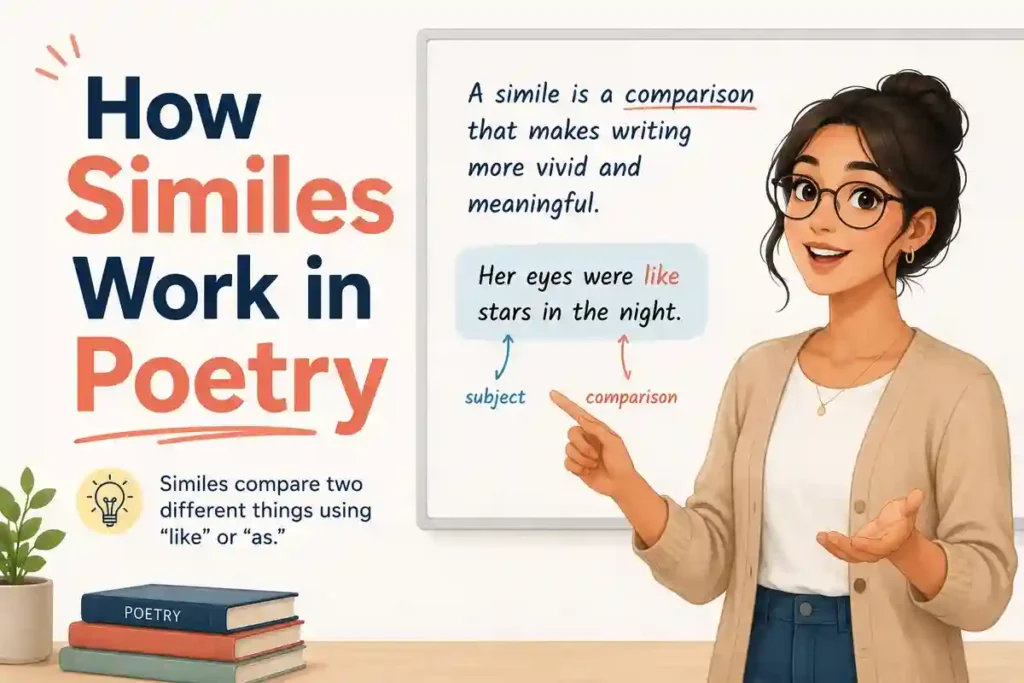
Every simile has three main parts.
| Part | Meaning | Example |
|---|---|---|
| Subject | The thing being described. | Her voice. |
| Comparison word | Usually like or as. | Like. |
| Image | The thing it is compared with. | A flowing stream. |
Complete example.
Her voice flowed like a quiet stream.
The poet does not claim her voice is a stream. Instead the comparison helps readers imagine its gentle sound.
Great poets choose comparisons that feel fresh and meaningful instead of predictable.
Compare these examples.
Ordinary
Bright as the sun.
More vivid
Bright as fresh snow under winter sunlight.
The second comparison gives readers a richer picture.
Similes vs Metaphors
People often confuse similes and metaphors because both compare two things.
The difference is simple.
| Feature | Simile | Metaphor |
|---|---|---|
| Uses like or as | Yes. | No. |
| Makes a direct comparison | Yes. | No. |
| States one thing is another | No. | Yes. |
| Easier for beginners to identify | Yes. | Sometimes not. |
Examples.
Simile
The moon hung like a lantern.
Metaphor
The moon was a lantern in the night sky.
Both create vivid imagery. The simile signals the comparison with like while the metaphor speaks more directly.
Key Features of Similes
Strong similes share several important qualities.
Similes Examples Compare Unlike Things
The comparison connects two different ideas that share a meaningful quality.
Example.
The classroom buzzed like a busy beehive.
A classroom is not a beehive but both can be full of energy and activity.
Similes Examples Make Ideas Easier to Picture
Readers understand abstract thoughts through familiar images.
Example.
Time slipped away like sand through open fingers.
The comparison makes the passing of time feel tangible.
Similes Examples Appeal to the Senses
Many effective similes help readers see hear smell taste or feel something.
Examples.
- Sweet as fresh honey.
- Loud like crashing waves.
- Soft as falling snow.
- Sharp like broken glass.
- Cool as morning dew.
The Use Of Similes Examples Strengthen Emotion
A thoughtful comparison can make joy fear love or sadness more powerful.
Example.
Her silence spread like winter fog.
Readers sense the emotional distance without needing a long explanation.
The Use Of Similes Examples Feel Natural
The strongest similes fit the poem instead of drawing attention to themselves.
Forced comparisons often confuse readers instead of helping them.
Original Similes Examples in Poetry
These original examples show how similes can create different moods and images.
Use Of Similes Examples in Nature
- The leaves fluttered like tiny green butterflies.
- The mountain stood as proud as an ancient king.
- The rain whispered like a secret through the trees.
- The lake rested like polished glass.
- The stars shimmered like scattered diamonds.
Similes Examples in Love
- Your smile glows like the first sunrise of spring.
- My heart follows you like the tide follows the moon.
- Your kindness spreads like gentle rain across dry land.
- Our memories bloom like wildflowers after rain.
- Your voice feels as comforting as a favorite song.
Using Similes Examples in Sadness
- Tears fell like quiet rain on empty streets.
- Loneliness lingered like a forgotten shadow.
- The room felt as cold as abandoned stone.
- Grief settled like dust over old photographs.
- Silence echoed like an empty church.
They Use For Hope
- Hope rose like the morning sun after a long storm.
- Dreams stretched like branches toward the sky.
- Faith stood as steady as an old oak tree.
- Courage burned like a candle in darkness.
- Tomorrow waited like an unopened gift.
Similes Examples For Happiness
- Her laughter bubbled like a joyful stream.
- The children ran like birds set free.
- Excitement spread like fireworks across the night sky.
- His smile shined like golden sunlight.
- Their celebration bloomed like spring flowers.
Similes Examples For Expert Language Insight
Many people think every sentence with like is a simile.
That is not true.
Look at these examples.
Not a simile
She looks like her mother.
This simply shows resemblance.
Simile
She shines like the morning sun.
This comparison creates imagery and emotional meaning.
That small difference helps readers identify similes more accurately while reading poetry or analyzing literature.
Similes Examples in Poetry
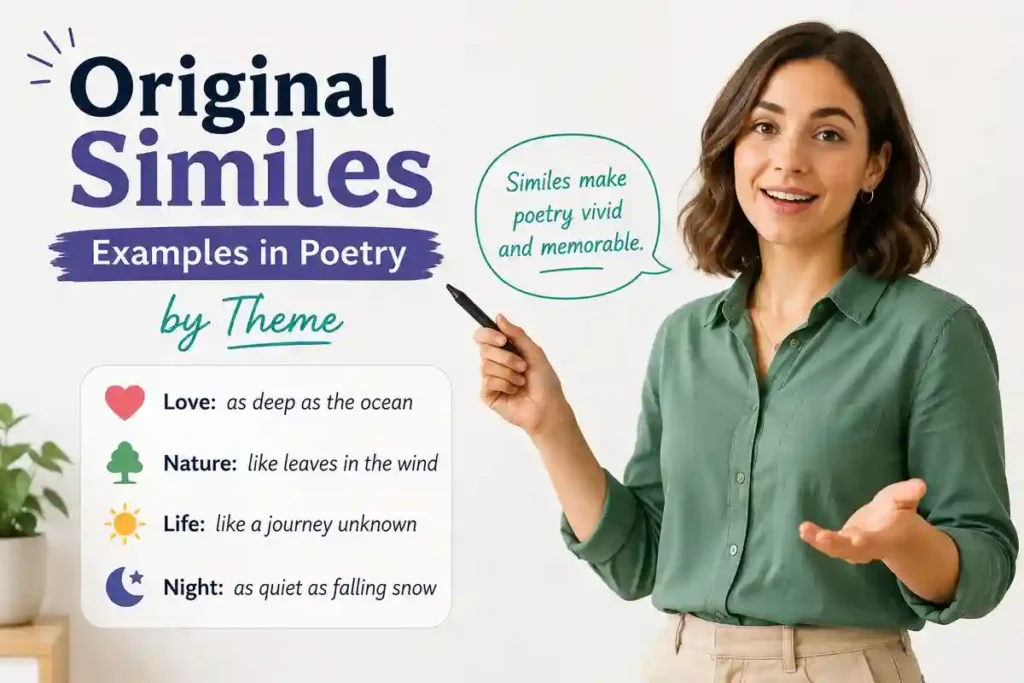
Original Similes Examples in Poetry by Theme
The best way to understand similes is to read them in context. The examples below are original and grouped by theme so you can quickly find the type of comparison you need.
Nature Similes
Nature gives poets endless inspiration because it is full of colors sounds movement and emotion.
- The river curled like a sleeping snake.
- The wind danced like playful children.
- The clouds drifted like silent ships.
- The trees stood as tall as faithful guards.
- The waterfall roared like an angry lion.
- The stars sparkled like scattered diamonds.
- The moon floated like a white feather.
- The sunrise spread like golden paint.
- The grass swayed like ocean waves.
- The snow covered the hills like a soft blanket.
- The thunder growled like a hungry bear.
- The leaves spun like tiny dancers.
- The valley rested like a peaceful dream.
- The sky stretched like an endless ocean.
- The flowers smiled like cheerful faces.
Love Similes
Poets often compare love with beautiful familiar things.
- Your smile shines like the morning sun.
- Your voice is as gentle as spring rain.
- My heart follows you like the tide follows the moon.
- Your touch feels like warm sunshine.
- Love blooms like wildflowers after rain.
- Our memories sparkle like stars.
- Your kindness spreads like fresh rain across dry land.
- Hope grows like a young tree.
- Your laughter rings like silver bells.
- Our bond is as strong as an old oak.
Sadness Similes
Similes can express difficult emotions with surprising clarity.
- My heart felt as heavy as stone.
- Tears rolled like quiet rain.
- Silence settled like thick fog.
- Loneliness followed me like a shadow.
- The empty room echoed like an abandoned church.
- Grief spread like dark clouds.
- Hope faded like a dying candle.
- The night felt as endless as the sea.
- Memories drifted like fallen leaves.
- My thoughts tangled like old vines.
Happiness Similes
Joy becomes more vivid through colorful comparisons.
- Her laughter bubbled like a mountain stream.
- The children raced like wild horses.
- Happiness spread like sunshine after rain.
- His grin stretched like a rainbow.
- Excitement burst like fireworks.
- Their celebration bloomed like spring flowers.
- Good news arrived like fresh morning light.
- Smiles appeared like blossoms in spring.
- Friendship grew like a healthy garden.
- The room glowed like summer daylight.
Courage Similes
- She stood as firm as a mountain.
- His courage burned like a bright flame.
- They marched like fearless warriors.
- Hope stood like a lighthouse during a storm.
- Her determination grew like a mighty tree.
- He faced danger like a seasoned sailor.
- Confidence rose like the morning sun.
- Faith held steady like solid rock.
- The team fought like determined wolves.
- Strength flowed like a rushing river.
Friendship Similes
- Friends stayed together like puzzle pieces.
- Our trust stood like an ancient bridge.
- Kindness spread like ripples across a lake.
- We laughed like children at recess.
- Good friends shine like guiding stars.
- Support feels like a warm blanket.
- Loyalty stands like a sturdy fence.
- Friendship grows like a healthy tree.
- Memories gather like treasured postcards.
- Our bond stayed strong like braided rope.
School Similes
These examples work well for students learning figurative language.
- The classroom buzzed like a beehive.
- The teacher smiled like sunshine.
- Books opened like doors to new worlds.
- Ideas flowed like rivers.
- The bell rang like church bells.
- Homework piled up like mountains.
- Students worked like busy ants.
- Knowledge spread like light.
- Curiosity burned like a campfire.
- Success tasted like sweet victory.
Animal Similes
Animals often inspire memorable poetic comparisons.
- Brave as a lion.
- Busy as a bee.
- Quiet as a mouse.
- Proud as a peacock.
- Wise as an owl.
- Gentle as a lamb.
- Quick as a fox.
- Strong as a horse.
- Graceful as a swan.
- Free as a bird.
Weather Similes
- Rain fell like silver threads.
- The storm roared like a furious giant.
- The breeze felt like cool silk.
- Sunshine poured like melted gold.
- Fog covered the town like a blanket.
- Snowflakes floated like feathers.
- Lightning flashed like a camera.
- The wind howled like wolves.
- Heat wrapped around us like a thick coat.
- The rainbow stretched like a painted bridge.
Time Similes
- Time slipped away like sand through fingers.
- Yesterday faded like an old photograph.
- Moments passed like blinking lights.
- The years raced like fast trains.
- Memories returned like gentle waves.
- Childhood vanished like morning mist.
- Life unfolded like a storybook.
- Seasons changed like turning pages.
- The future waited like an unopened gift.
- Days drifted like clouds.
Similes Examples for Students
Students often find it easier to recognize similes through short familiar sentences.
- The baby slept like a kitten.
- Dad worked like a machine.
- Ice felt as cold as winter.
- The cookie smelled like fresh butter.
- The balloon floated like a cloud.
- My backpack felt as heavy as a rock.
- The puppy ran like the wind.
- The soup tasted like home.
- Grandpa smiled like sunshine.
- My sister sings like a bird.
Similes by Grade Level
Elementary School
These similes use simple words and everyday experiences.
- Soft as cotton.
- Fast as lightning.
- Bright as the sun.
- Busy as a bee.
- Cold as ice.
Middle School
Students at this level can understand more descriptive comparisons.
- The forest stood like a silent cathedral.
- Her dreams floated like colorful balloons.
- The rain tapped like tiny fingers.
- Hope grew like fresh grass.
- The crowd moved like ocean waves.
High School
Older students often study deeper meanings and symbolism.
- Memory clung like ivy to forgotten walls.
- Fear spread like cracks across glass.
- Regret lingered like smoke after a fire.
- Faith stood like a lighthouse in darkness.
- Love returned like spring after winter.
Famous Similes in Poetry
Many classic poets used similes to create unforgettable imagery.
Robert Burns
O My Luve’s Like a Red Red Rose
One of the most famous similes in English poetry compares love to a beautiful red rose.
O my Luve’s like a red red rose.
The comparison highlights beauty freshness and deep affection.
William Wordsworth
In several poems Wordsworth compares elements of nature with familiar objects to make landscapes feel alive and personal.
His similes help readers experience nature instead of simply observing it.
Samuel Taylor Coleridge
Coleridge often used vivid comparisons to create mystery wonder and emotional depth.
His poetic style shows how similes can shape mood as much as imagery.
Emily Dickinson
Dickinson filled her poems with surprising comparisons that invite readers to think beyond the obvious.
Her similes often connect ordinary objects with profound emotions.
Common Mistakes People Make By Similes Examples
Many writers misuse similes because they confuse them with other literary devices.
Avoid these common mistakes.
Using Similes Examples Like Without Making a Comparison
Incorrect.
She looks like her sister.
This sentence shows resemblance but does not create figurative imagery.
Correct.
She shines like the morning sun.
Mixing Similes and Metaphors
Incorrect.
Life is like a roller coaster that is a wild animal.
The comparison becomes confusing because it jumps between unrelated images.
Choose one clear comparison.
Using Worn Out Similes
Readers have seen some comparisons so often that they no longer feel fresh.
Examples include.
- Busy as a bee.
- Cold as ice.
- Blind as a bat.
Classic similes still have value but original comparisons leave a stronger impression.
Tips for Writing Better Similes Examples
Anyone can write stronger poetry by following a few simple habits.
Look Closely at Everyday Life
Great similes often come from ordinary experiences.
A cup of coffee a quiet street or falling leaves can inspire powerful imagery.
Appeal to the Senses
Ask yourself what something looks sounds smells tastes or feels like.
The more sensory detail you include the more vivid the comparison becomes.
Stay Original
Fresh comparisons capture attention.
Instead of writing.
Bright as the sun.
Try.
Bright as fresh snow under winter sunlight.
The second comparison creates a richer image.
Keep It Simple
A clear comparison usually works better than one packed with unnecessary details.
Match the Mood
A joyful poem deserves warm hopeful images.
A sad poem works better with darker quieter comparisons.
Readers notice that emotional consistency even if they cannot explain why.
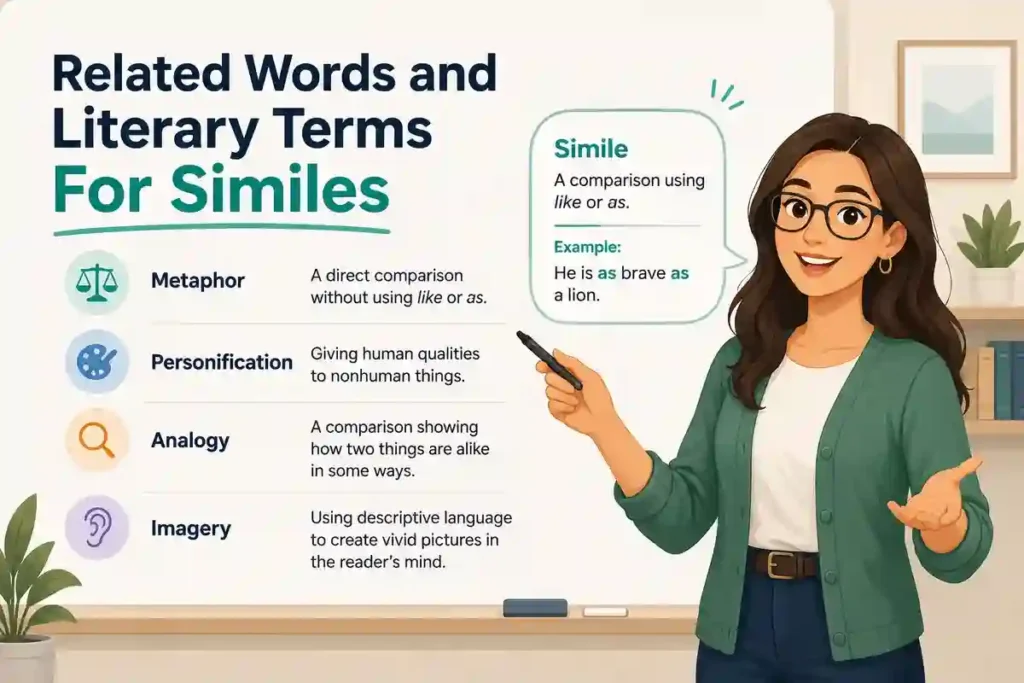
Related Literary Devices
Learning related figures of speech helps you recognize similes more easily.
| Literary Device | Purpose | Example |
|---|---|---|
| Metaphor | Direct comparison. | Time is a thief. |
| Personification | Gives human traits to nonhuman things. | The wind whispered. |
| Hyperbole | Deliberate exaggeration. | I waited forever. |
| Imagery | Creates sensory pictures. | The sweet scent filled the room. |
| Symbolism | Represents a deeper meaning. | A dove represents peace. |
Understanding these devices makes reading poetry much more enjoyable because you begin to notice the layers beneath the words.
Practical Writing Tips for Using Similes in Poetry
Writing a memorable simile takes more than placing the word like or as between two ideas. The strongest comparisons feel natural and help readers experience the poem instead of simply reading it.
Use these tips to create similes that leave a lasting impression.
Start With a Clear Image
Think about the object person or feeling you want readers to picture.
Ask yourself.
- What does it look like?
- What does it sound like?
- What emotion does it create?
A clear mental image leads to a stronger comparison.
Compare Ideas That Share One Quality
A good simile connects two different things through one obvious characteristic.
For example.
The lake lay as still as polished glass.
The shared quality is smoothness and stillness.
Avoid Overused Comparisons
Some similes have appeared so often that they no longer surprise readers.
Examples include.
- Cold as ice.
- Busy as a bee.
- Quiet as a mouse.
Classic comparisons still work in some situations but fresh ideas usually create a stronger impact.
Read Your Simile Out Loud
Poetry should sound smooth.
Reading aloud helps you notice awkward wording repetitive sounds or unnecessary words.
Match the Tone of the Poem
A cheerful poem should use warm hopeful images.
A serious poem should use comparisons that support its mood.
Every simile should feel like it belongs naturally inside the poem.
Related Words and Literary Terms For Similes
Understanding connected terms builds a stronger foundation for reading and writing poetry.
Synonyms
Depending on the context you may come across these related terms.
- Comparison.
- Figurative language.
- Image.
- Analogy.
- Literary comparison.
- Descriptive language.
- Poetic expression.
Related Literary Devices
- Metaphor.
- Personification.
- Hyperbole.
- Imagery.
- Symbolism.
- Alliteration.
- Assonance.
- Onomatopoeia.
- Oxymoron.
- Irony.
Common Collocations
These word combinations appear frequently in books classrooms and literary discussions.
- Vivid simile.
- Poetic simile.
- Creative comparison.
- Figurative language.
- Literary device.
- Strong imagery.
- Sensory details.
- Poetic expression.
- Visual imagery.
- Emotional impact.
Expert Editorial Insight
After reviewing thousands of pieces of student writing one pattern appears again and again.
Many writers believe adding more similes automatically improves a poem.
It does not.
Too many comparisons distract readers and weaken the emotional impact.
Strong poetry values quality over quantity.
One thoughtful comparison often creates a stronger image than five ordinary ones.
Professional editors also look for originality.
Instead of copying familiar similes from books or websites try observing everyday life.
A cracked sidewalk after rain.
The smell of fresh coffee.
A playground after sunset.
Real experiences often produce the most memorable comparisons because readers recognize their authenticity.
Frequently Asked Questions
What is a simile in poetry?
A simile is a figure of speech that compares two different things by using the words like or as. Poets use similes to create vivid imagery and make emotions easier to understand.
What is the purpose of a simile?
A simile helps readers imagine ideas more clearly. It adds emotion detail and sensory imagery that make poems more engaging.
How can I identify a simile?
Look for comparisons that use like or as.
For example.
The stars glittered like diamonds.
What is the difference between a simile and a metaphor?
A simile uses like or as to compare two things.
A metaphor says one thing is another without those comparison words.
Can a poem contain many similes?
Yes. Many poems include several similes.
The best poems use them thoughtfully so each comparison adds meaning instead of repeating the same idea.
Are similes only used in poetry?
No.
People use similes every day in conversations novels speeches songs and advertisements because they make ideas easier to understand.
Why do students learn similes?
Learning similes improves reading comprehension vocabulary creative writing and literary analysis.
They also help students express ideas with greater imagination.
Can a simile compare emotions?
Yes.
Many poets compare emotions with familiar experiences.
For example.
Her sadness spread like evening fog.
What makes a simile effective?
An effective simile feels natural creates a clear mental picture and supports the overall mood of the poem.
Do all comparisons count as similes?
No.
A sentence must compare two different things figuratively by using like or as.
For example.
She looks like her sister.
This shows resemblance but does not create figurative imagery.
Can beginners write good similes?
Absolutely.
The best approach is to observe everyday life and compare feelings objects or experiences with familiar images.
Practice makes your comparisons more original over time.
Why are similes important in literature?
Similes help writers explain complex ideas through familiar experiences.
They make stories poems and speeches more memorable while strengthening emotional connections with readers.
Conclusion
Understanding similes examples in poetry opens the door to richer reading and stronger writing. A well crafted simile does more than compare two things. It creates emotion paints vivid pictures and helps readers experience a poem through their imagination.
The strongest similes feel natural instead of forced. They connect ordinary experiences with fresh ideas that readers instantly recognize. That is why great poets continue to rely on this timeless literary device across every generation.
As you read more poetry pay attention to the comparisons that stay with you long after the poem ends. Then practice writing your own. The more you observe the world around you the easier it becomes to create original similes that bring your writing to life.

Founding Editor
Maya spent six years as a copyeditor at a regional newspaper before starting Grammist, which is where the “answer first” format came from: newsroom style guides don’t have room for a preamble.
She writes and reviews most of the word-pair and spelling entries, and has final say on anything that goes out under the Grammist name.