

Growth navigate is a useful concept for people and businesses that want to move forward with a clear direction. Growth involves improving skills, developing better habits, expanding a business, or reaching meaningful goals. Navigation means choosing a direction, understanding the available options, and making adjustments along the way. Together, these ideas create a practical approach to progress that focuses on purposeful action rather than guesswork.
Many people want to grow, but wanting something and achieving it are two different things. A business owner might want more customers without knowing which marketing strategy to follow. A professional might want a promotion but lack a clear development plan. Someone working on personal goals might start with enthusiasm, lose focus, and struggle to maintain momentum.
The growth navigate approach helps address these challenges by connecting ambition with planning, consistent action, and measurable results. Instead of chasing every new opportunity, you learn to identify what matters, use available resources wisely, and adjust your direction when circumstances change.
This guide explains the meaning of growth navigation, its core principles, practical strategies, common challenges, and ways to measure progress. It also explores how individuals, entrepreneurs, and established businesses can apply these ideas to create sustainable results.
The central idea is simple: meaningful growth requires a destination, a workable plan, and the willingness to adapt when the path changes.
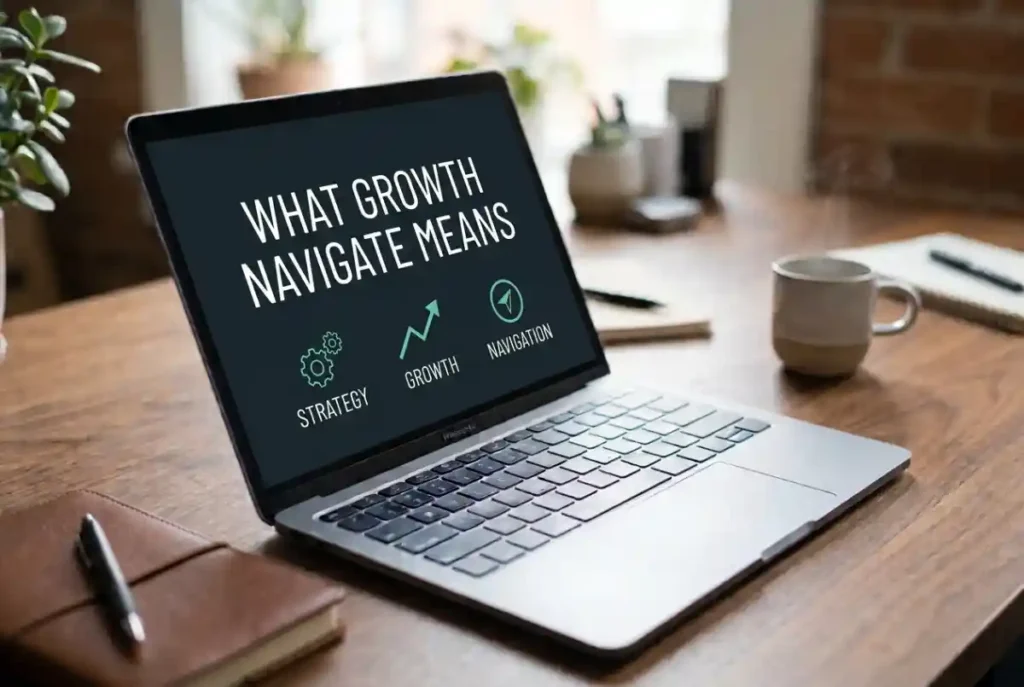
What Growth Navigate Means
Growth navigation is the process of identifying a desired outcome, choosing a direction, taking purposeful steps, and evaluating the results. It combines goal setting with decision making, learning, and ongoing improvement.
The phrase growth navigate can describe a general mindset rather than one specific product, company, or officially recognized methodology. Its meaning depends on the context in which someone uses it. In personal development, it may refer to building skills and making better life choices. In business, it can describe planning for expansion, improving performance, and responding to market changes.
The concept rests on three connected ideas.
Growth
Identify what you want to improve. This could mean learning a new skill, increasing revenue, improving customer satisfaction, or developing healthier routines.
Navigation
Choose a direction based on your goals, current circumstances, available resources, and the options in front of you.
Progress
Take action, review the results, learn from mistakes, and improve your next decision.
These three elements work together. Growth without navigation can lead to scattered effort. Navigation without action produces plans that never become reality. Action without evaluation makes it difficult to understand what works.
A practical growth navigate strategy connects all three so that daily activities support a larger objective.
Why Growth Navigation Matters
Progress rarely follows a perfectly straight line. People encounter unexpected expenses, changing priorities, competition, limited time, and new responsibilities. Businesses face shifting customer expectations, economic uncertainty, and pressure to use their resources efficiently.
Without a clear direction, these challenges can make every decision feel urgent. You might spend time on activities that seem productive but do little to support your main goal.
Growth navigation provides a way to prioritize decisions instead of reacting to every new demand.
It creates a clear direction
A specific destination makes it easier to decide what deserves your attention. For example, a freelancer who wants to increase monthly income can focus on improving service packages, finding qualified clients, and strengthening existing relationships.
That goal is more useful than simply deciding to work harder. It gives the freelancer a way to identify relevant actions and ignore distractions.
It encourages better decisions
Every goal comes with competing options. You might have several courses to take, marketing channels to explore, or projects to pursue.
A structured growth navigate plan gives you criteria for comparing those choices. You can consider cost, expected benefits, time requirements, risks, and alignment with your priorities before committing resources.
It makes progress measurable
Motivation changes from day to day. Measurements offer a more reliable way to understand performance.
A student can track practice hours and test results. A business can monitor qualified leads, customer retention, and profit margins. A person building healthier routines can record consistency rather than relying on memory.
The purpose is not to measure everything. It is to identify a few useful indicators that show if your efforts are producing the desired result.
It supports long term improvement
Quick wins can be encouraging, but lasting progress usually depends on repeatable habits and sound decisions.
Growth navigation helps you look beyond immediate results. Instead of asking only how to achieve something quickly, you also consider how to maintain the improvement without exhausting your time, energy, or budget.

The Core Principles of Growth Navigate
A useful framework does not need complicated terminology or dozens of rules. A few practical principles can guide most personal and professional goals.
Start with a specific outcome
Begin by describing the result you want in clear language.
Instead of saying, “I want my business to grow,” define what growth means for your situation. You might aim to increase recurring revenue, improve customer retention, or launch a service for a new audience.
Personal goals benefit from the same clarity. “I want to become better at writing” is a starting point. “I want to publish two well researched articles each month and improve their readability” gives you a more concrete target.
Specific outcomes reduce confusion because they provide a standard for evaluating progress.
Understand your starting point
Before choosing a route, assess your current position.
A business should understand its revenue, operating costs, customer needs, and available capacity. An individual might review current skills, daily routines, financial commitments, and the time available for learning.
This step prevents unrealistic planning. A goal that looks simple on paper may require more money, experience, or time than you currently have.
An honest assessment is not an excuse to avoid ambition. It helps you build a plan that reflects reality.
Focus on the highest value activities
Not every action produces the same benefit. Some tasks create meaningful progress, while others consume time without addressing the main problem.
Ask yourself three questions before committing to a major activity:
- Does this action support my main goal?
- Can I reasonably measure its impact?
- Is this the best use of my available resources?
These questions help keep your growth navigate process focused on useful work instead of constant activity.
Stay flexible
A plan should provide direction without becoming a rigid set of instructions.
New information may reveal that your original approach is too expensive, too slow, or poorly suited to your audience. When that happens, examine the evidence and change the plan if necessary.
Flexibility does not mean abandoning a goal every time progress becomes difficult. It means recognizing the difference between a worthwhile challenge and an approach that consistently fails.
Learn from results
Every meaningful attempt produces information. A successful experiment can reveal a promising opportunity. A failed effort can show you what needs to change.
Review your results without turning every setback into a personal judgment. Ask what happened, what influenced the outcome, and what you can do differently next time.
Over time, these small adjustments make your decisions more informed and your strategy more effective.
How to Build a Growth Navigate Plan
A practical plan turns a broad ambition into manageable actions. You can use the following six steps for a personal goal, a career decision, a small business, or a larger organization.
1
Define your goal
Write down the result you want and explain why it matters. Give the goal a deadline if a specific timeline makes sense. A clear objective provides the foundation for every decision that follows.
2
Assess your resources
Review your time, budget, skills, tools, and available support. Identify the resources you already have and the gaps you need to address before moving forward.
3
Choose your next steps
Break the larger goal into smaller tasks. Select actions that directly support the intended result and arrange them in a practical order.
4
Take consistent action
Schedule the work and begin with a manageable commitment. Regular progress often matters more than occasional bursts of activity followed by long periods of inactivity.
5
Measure your results
Choose a few indicators that reflect your goal. Review them regularly to understand your progress and spot problems before they become harder to solve.
6
Adjust your approach
Keep the methods that work, improve those that show potential, and replace activities that repeatedly waste resources. Use what you learn to shape the next stage of your plan.
Consider a small business that wants to increase monthly sales by 15% over six months. Its owner reviews past sales, identifies its most profitable products, and studies customer feedback. The owner then improves product descriptions, tests a new email campaign, and tracks conversion rates each month.
If the campaign attracts visitors but generates few purchases, the owner can investigate pricing, product information, or checkout problems. The business does not have to abandon its goal simply because the first approach falls short.
That is the practical value of growth navigation: the destination remains clear, but the route can change as new evidence becomes available.

Growth Navigate Strategies for Personal Development
Personal growth often begins with small choices that become habits over time. You might want to communicate more clearly, manage your schedule better, improve your confidence, or prepare for a new career.
A personal growth navigate strategy helps connect those ambitions with practical routines.
Build skills through regular practice
Learning becomes more useful when you apply new information. Reading about communication, for example, can introduce valuable ideas, but practicing active listening helps turn those ideas into real skills.
Choose one skill that supports your goal. Set aside time to practice it, seek feedback, and review your improvement every few weeks.
Avoid trying to master several unrelated skills at once. Focused practice makes it easier to recognize progress and identify the next area to improve.
Develop habits that support your goals
Your daily routines influence your long term results. If you want to write more, a regular writing schedule can help. If you want to improve professionally, reserving time for learning can keep your skills current.
Start with habits that fit your existing responsibilities. A realistic routine you can maintain is more valuable than an ambitious schedule you abandon after a few days.
Manage setbacks constructively
Progress can slow because of unexpected demands, mistakes, or changing circumstances. These moments do not automatically mean that your goal is unrealistic.
Use setbacks to examine your approach. You may need a smaller daily target, a different learning method, or more support from others.
The growth navigate mindset encourages you to treat obstacles as information. That perspective helps you respond thoughtfully instead of giving up at the first sign of difficulty.
How Businesses Can Apply Growth Navigate
Businesses need more than sales targets to achieve sustainable growth. They also need to understand customers, control costs, develop employees, and respond to market changes.
Growth navigation can help business owners connect these responsibilities with a shared direction.
Understand customer needs
Customer research can reveal the problems people want solved, the features they value, and the reasons they choose one company over another.
Use customer interviews, support requests, reviews, and sales data to identify recurring patterns. These insights can guide product development, customer service, and marketing decisions.
Avoid assuming that more website traffic or social media followers automatically means a healthier business. Focus on the outcomes that matter to your business model.
Improve marketing performance
Effective marketing starts with a clear audience and a relevant message. Businesses can test different content formats, email campaigns, landing pages, and advertising channels to discover what attracts qualified customers.
Track meaningful indicators such as conversion rates, customer acquisition costs, repeat purchases, and revenue. Use these measurements to compare campaigns and allocate budgets more carefully.
A thoughtful growth navigate strategy also recognizes that marketing results take time. Give experiments enough room to produce useful evidence, but do not continue funding activities that consistently fail to meet reasonable targets.
Strengthen operations and teamwork
Growth can create pressure on employees, processes, and customer support. A business that attracts more customers without improving its operations may struggle to maintain quality.
Review how work moves through the organization. Look for repeated delays, unclear responsibilities, unnecessary manual tasks, and communication gaps.
Set priorities that employees understand. Give teams the tools and authority they need to complete their work, and review performance without creating unnecessary reporting burdens.
Sustainable growth depends on building the capacity to handle increased demand, not just generating more demand.
Common Growth Navigation Mistakes
Even a sensible plan can lose effectiveness when people make avoidable mistakes.
| Common mistake | Why it causes problems | Better approach |
|---|---|---|
| Setting vague goals | Progress becomes difficult to evaluate. | Define a specific outcome. |
| Chasing every opportunity | Time and money become scattered. | Prioritize the strongest opportunities. |
| Expecting immediate results | Normal setbacks can feel like failure. | Set realistic milestones. |
| Ignoring useful data | Decisions rely too heavily on assumptions. | Review relevant performance indicators. |
| Refusing to change direction | An ineffective method continues consuming resources. | Adapt based on evidence. |
| Trying to do everything alone | Missing skills and support slow progress. | Ask for feedback and collaborate. |
Another common problem is confusing constant activity with meaningful progress. A person can spend hours planning, researching, and organizing without completing the work that moves the goal forward.
To avoid this trap, identify one important action you can complete today. Then schedule the next action instead of waiting for the perfect plan.
A strong growth navigate routine balances preparation with execution. It gives you enough structure to stay focused and enough flexibility to respond to real conditions.
How to Measure Growth and Track Progress
Measurement helps you distinguish real improvement from activity that only feels productive. The right indicators depend on your goal, so choose measures that reflect the outcome you want to achieve.
For personal development, useful indicators include completed practice sessions, skills demonstrated, projects finished, and feedback received.
For businesses, relevant measures might include revenue growth, profit margins, customer retention, conversion rates, or repeat purchases.
A practical growth navigate system uses three levels of measurement.
- Activity measures. These track the work you complete, such as publishing articles, contacting potential customers, or practicing a new skill.
- Performance measures. These show how well your activities work, such as engagement rates, sales conversions, or assessment scores.
- Outcome measures. These reveal progress toward your larger objective, such as higher profits, career advancement, or improved performance.
Review your measurements at regular intervals. Weekly reviews can help you manage daily activities, while monthly or quarterly reviews may provide a better view of larger trends.
Remember that numbers need context. A temporary decline in sales might reflect seasonal demand rather than a failing strategy. Similarly, completing more tasks does not necessarily mean you are becoming more effective.
Use measurements to ask better questions, identify patterns, and decide what deserves attention next.
Tools That Can Support Growth Navigate
You do not need expensive software to put growth navigation into practice. Start with tools that solve a specific problem.

Planning tools
Calendars, notebooks, and task managers help organize priorities, deadlines, and daily commitments. They are especially useful for turning broad goals into scheduled actions.

Analytics tools
Spreadsheets and analytics platforms help track performance, compare results, and identify patterns. Businesses can use them to evaluate marketing, revenue, and customer behavior.

Learning and feedback tools
Online courses, professional communities, mentors, and feedback sessions can help you build skills and discover better ways to solve problems.
Choose tools based on your needs instead of collecting more software than you can use. A simple spreadsheet that you update consistently can be more valuable than a complicated dashboard you rarely check.
The goal of growth navigate is to improve your decisions and results. Technology should support that process rather than become another distraction.
Frequently Asked Questions
What does growth navigate mean?
Growth navigate describes an approach to progress that combines goal setting, planning, action, and adjustment. It can apply to personal development, career advancement, entrepreneurship, and business strategy. The central idea is to identify a destination, choose practical steps, measure results, and change direction when circumstances or new information call for a different approach.
Is growth navigate a specific company or platform?
The phrase alone does not identify a particular company, website, or software platform. Its meaning depends on the context in which it appears. If you encounter it as a brand name or service, check the official website and available business information before assuming it refers to a specific organization.
How can I use growth navigate in everyday life?
Start by choosing one meaningful goal. Break it into smaller actions, schedule time to complete them, and review your progress regularly. For example, if you want to improve your writing, you could practice three times a week, request feedback, and track the projects you complete. Small, consistent actions make larger goals easier to manage.
Why is growth navigation important for businesses?
It helps businesses connect their objectives with decisions about customers, marketing, operations, and resources. Instead of expanding without a clear plan, business owners can identify priorities, measure performance, and respond to changing conditions. This approach can reduce wasted effort and support more sustainable development.
What is the first step in a growth navigate plan?
The first step is defining the outcome you want to achieve. Make your goal specific enough to guide decisions and evaluate progress. Next, assess your current position, available resources, and the obstacles you may face. This groundwork helps you create a practical plan instead of relying on vague ambitions.
How long does it take to see results?
The timeline depends on the goal, the resources available, and the actions involved. A new daily habit may show early progress within weeks, while career advancement or business expansion can take months or longer. Set realistic milestones and evaluate progress over an appropriate period rather than expecting every effort to produce immediate results.
Can growth navigation help with career development?
Yes. You can use it to identify career goals, evaluate skill gaps, pursue relevant training, build professional relationships, and prepare for new responsibilities. Regularly reviewing your progress helps you recognize which activities are creating opportunities and which skills need more attention.
What is the difference between growth and sustainable growth?
Growth means increasing or improving something, such as revenue, knowledge, or performance. Sustainable growth means maintaining that improvement without creating unacceptable costs, risks, or pressure on available resources. For a business, this may involve balancing sales with profitability and customer satisfaction. For an individual, it can mean making progress without sacrificing health, rest, or important responsibilities.
Final Thoughts
Growth navigate offers a practical way to approach personal improvement and business development with greater purpose. It connects clear goals with focused action, meaningful measurements, and the willingness to learn from experience.
You do not need to predict every challenge or build a perfect plan before getting started. Choose a direction, take the next useful step, and pay attention to the results. With consistent effort and thoughtful adjustments, growth becomes a process you can manage rather than an outcome you simply hope to achieve.

Rowan Blake reviews websites, online services, and digital tools to help readers make informed decisions. With a focus on honest insights, practical comparisons, and clear explanations, Rowan makes it easier to discover useful platforms and choose the right tools with confidence.