
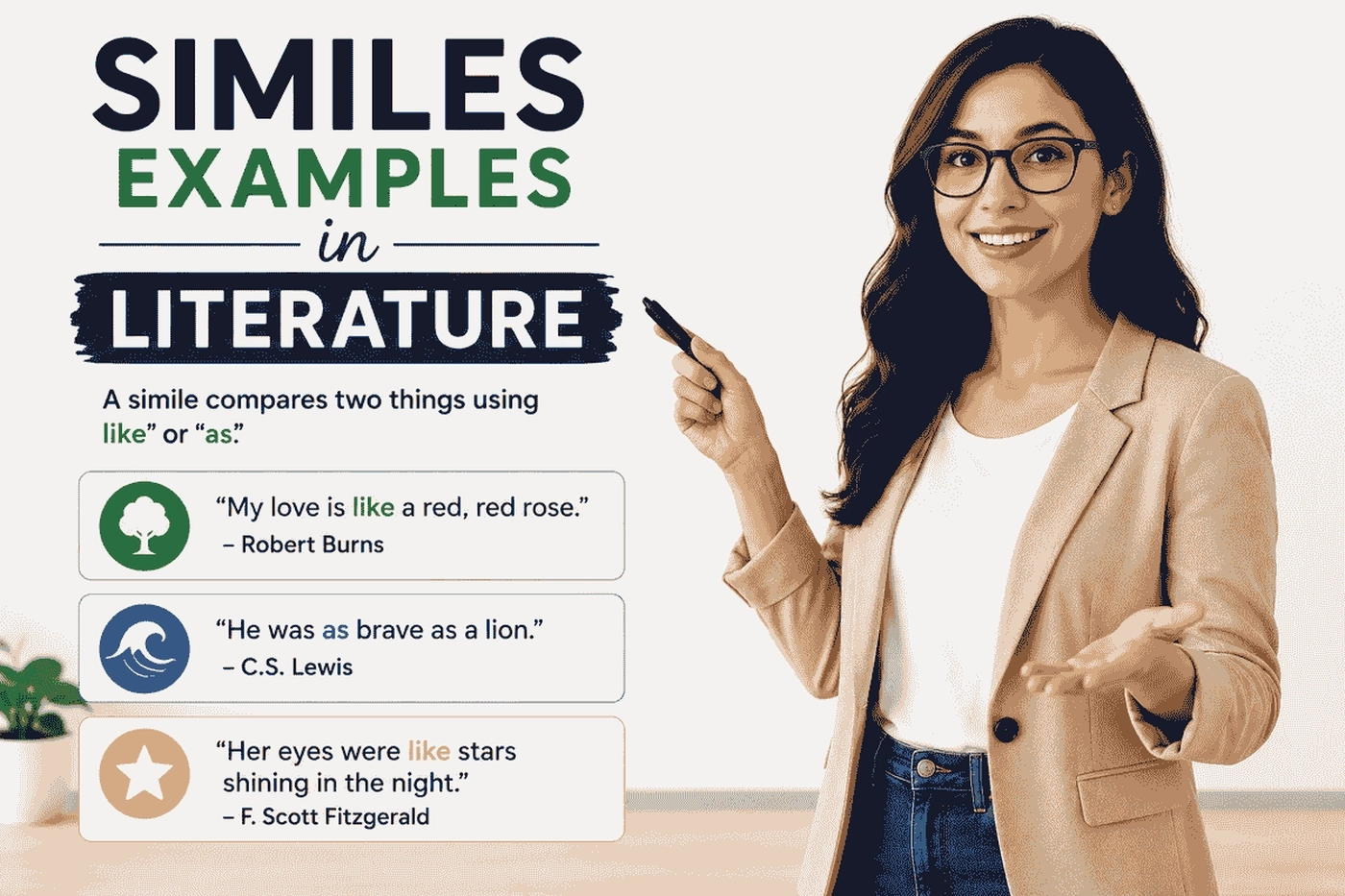
Similes examples in literature show how writers transform simple ideas into memorable images. A simile compares two unlike things by using like or as making descriptions more vivid and emotions easier to understand. You’ll find examples of similes in literature in novels poems plays and short stories where they help readers picture characters settings and feelings with greater clarity. From classic masterpieces to modern fiction literary similes add depth beauty and meaning to every page. In this guide you’ll explore famous similes in literature discover why authors use them and learn how these powerful comparisons make stories more engaging and unforgettable.
This introduction naturally includes the primary keyphrase and its semantic variations without sounding repetitive or overoptimized.
Quick answers
Similes in literature compare two different things by using the words like or as. Authors use them to create stronger imagery express emotions and help readers picture ideas more clearly. Famous similes appear in novels poems plays and short stories where they bring characters settings and emotions to life.
Table of Contents
- What Are Similes in Literature.
- Why Authors Use Similes in Literature.
- How Similes Work in Literature.
- Famous Similes Examples in Literature.
- Similes Examples in Classic Literature.
- Similes Examples in Poetry.
- Similes Examples in Modern Literature.
- Similes vs Metaphors in Literature.
- Common Mistakes.
- Tips for Writing Better Similes.
- Frequently Asked Questions.
- Conclusion.
What Are Similes in Literature
A simile is a figure of speech that compares two different things by using like or as. The comparison helps readers understand an idea by connecting it to something familiar. Instead of simply describing a person place or feeling an author creates a picture that readers can easily imagine.
Think of a simile as a bridge. One side holds the idea the writer wants to explain. The other side holds something familiar to the reader. The comparison connects both sides and makes the meaning stronger.
For example.
- Her smile was as bright as the morning sun.
- The river flowed like a silver ribbon.
- His voice was as soft as falling snow.
These comparisons make the descriptions more colorful than plain statements.
Without a simile.
The river was long and shiny.
With a simile.
The river flowed like a silver ribbon.
The second sentence creates a picture almost instantly.
Why Authors Use Similes in Literature
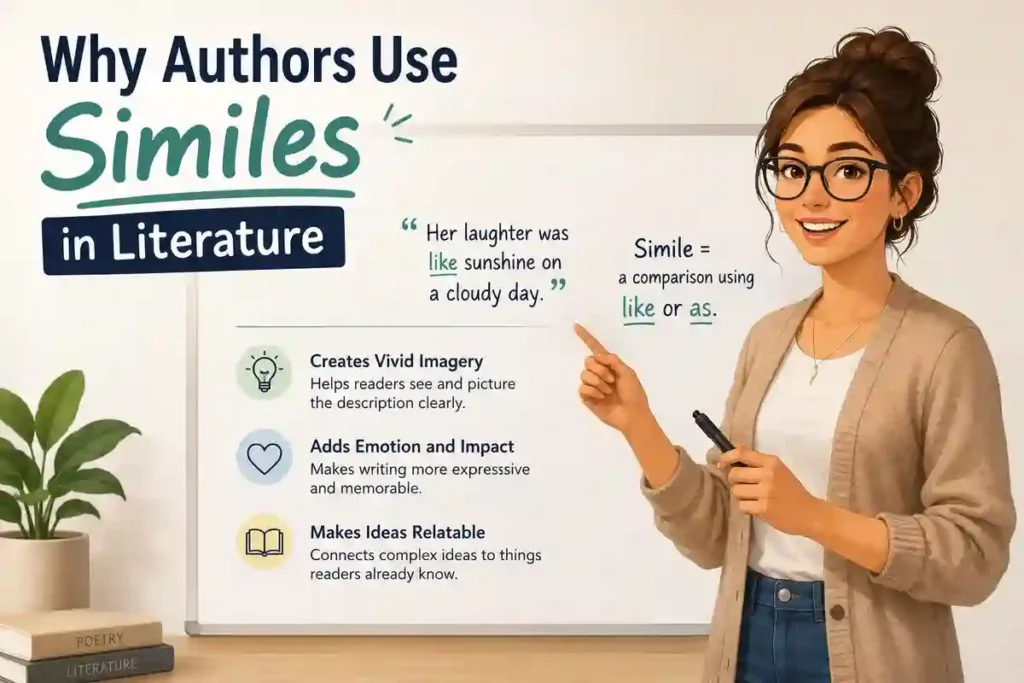
Writers have used similes for centuries because they help readers experience a story instead of simply reading it. A good simile adds emotion movement and personality without making the writing difficult to understand.
Some of the biggest reasons authors use similes include.
- To create vivid mental images.
- To explain difficult ideas through familiar objects.
- To make emotions stronger.
- To build memorable characters.
- To make descriptions more engaging.
- To create rhythm in poetry and prose.
- To help readers connect with the story.
A carefully chosen simile can stay in a reader’s mind long after the book is finished. It works much like a photograph that captures a single moment but tells a much bigger story.
How Similes Work in Literature
Every simile has four basic parts.
| Part | Example |
|---|---|
| Subject | The moon |
| Linking word | Like |
| Comparison | A glowing lantern |
| Shared quality | Brightness |
Example.
The moon hung like a glowing lantern in the night sky.
The moon is not actually a lantern. The comparison helps readers imagine its brightness and warm appearance.
This simple structure appears in almost every type of literature including novels poems children’s books plays and speeches.
Famous Similes Examples in Literature
Some similes have become unforgettable because they create powerful images with only a few words. Great authors understand that readers remember pictures more easily than plain descriptions.
Here are several famous similes examples in literature.
My Love Is Like a Red Red Rose by Robert Burns
One of the most famous literary similes begins with a comparison that almost everyone recognizes.
O my Luve’s like a red red rose.
Burns compares love to a fresh blooming rose. The image suggests beauty youth freshness and deep affection. The comparison feels natural because readers already connect roses with romance.
This line has remained popular for centuries because it expresses a powerful feeling through a simple image.
I Wandered Lonely as a Cloud by William Wordsworth
Wordsworth opens his famous poem with another timeless simile.
I wandered lonely as a cloud.
Instead of saying he felt lonely the poet compares himself to a cloud drifting across the sky. Readers immediately picture movement distance and quiet isolation.
The comparison also prepares readers for the joyful discovery of the daffodils later in the poem.
Romeo and Juliet by William Shakespeare
Shakespeare often mixed metaphors and similes to create unforgettable scenes.
One example compares speed to lightning making the action feel quick exciting and impossible to stop.
His comparisons often transformed ordinary emotions into dramatic unforgettable moments.
Why These Similes Still Matter Today
Many famous similes were written hundreds of years ago yet people still remember them. That is not an accident.
Strong similes connect human experiences that never change. Love fear hope loneliness excitement and joy are universal emotions. Readers from different generations can still understand these comparisons because the feelings remain the same.
A great simile does not simply decorate a sentence. It helps readers see something they have never noticed before.
Imagine reading.
The child smiled.
Now compare it with.
The child smiled like the first sunshine after a week of rain.
The second sentence carries warmth hope and happiness in just a few extra words. That is the power of a well written simile.
Characteristics of Effective Similes in Literature
The best similes usually share several qualities.
- They create a clear picture.
- They compare unlike things with a shared quality.
- They feel natural instead of forced.
- They strengthen the emotion of the passage.
- They fit the tone of the story.
- They help readers remember the scene.
Professional writers rarely choose comparisons just because they sound clever. Every comparison serves a purpose.
That purpose might be to reveal a character describe a setting build suspense or create an emotional connection.
Common Themes Found in Similes in Literature
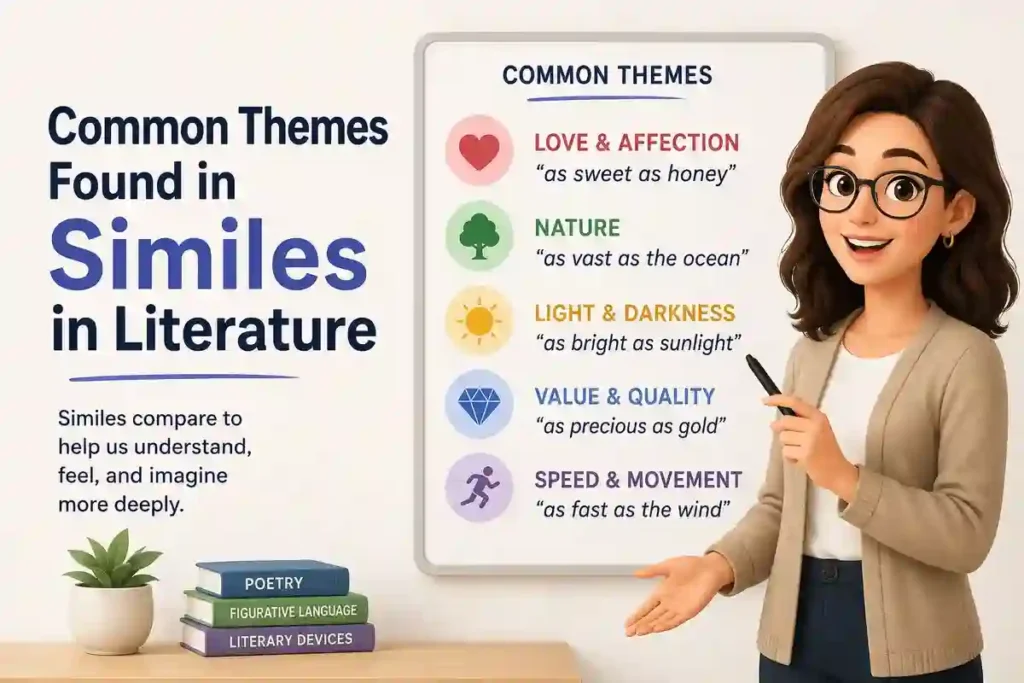
As you read more novels poems and plays you will notice certain patterns.
Authors often compare people with.
- Animals.
- Flowers.
- Stars.
- Fire.
- Water.
They often compare emotions with.
- Storms.
- Oceans.
- Seasons.
- Light.
- Darkness.
Nature provides endless inspiration because nearly everyone understands these images.
A frightened character might shake like a leaf.
A peaceful lake may appear as smooth as glass.
These comparisons help readers picture scenes without lengthy explanations.
Expert Language Insight
As language editors we often notice that beginning writers use similes simply to make writing longer. Experienced authors do the opposite.
They choose one powerful comparison instead of several weak ones.
One memorable simile is worth far more than five ordinary descriptions. The goal is not to impress readers with fancy language. The goal is to help readers see the scene exactly as the writer imagined it.
That is why the greatest authors use similes carefully. Every comparison earns its place.
This same principle applies to essays speeches marketing copy and everyday writing. A meaningful simile creates an image that stays with readers long after they finish reading.
Common Mistakes When Using Similes in Literature
Similes are powerful, but they lose their impact when used incorrectly. Many students and beginning writers make the same mistakes. Learning to avoid them will make your writing clearer and more engaging.
Here are some of the most common mistakes.
Using Too Many Similes
A few strong comparisons can make writing memorable. Filling every paragraph with similes has the opposite effect. Readers may lose focus because every sentence competes for attention.
Instead of writing several average similes, choose one that creates the strongest image.
Using Clichéd Comparisons
Some similes have been used so often that they no longer surprise readers.
Examples include.
- As busy as a bee.
- As cold as ice.
- As quiet as a mouse.
- As light as a feather.
These expressions are still correct, but original comparisons often create a stronger impression.
Comparing Unrelated Things
A simile should help readers understand an idea. If the comparison feels random or confusing, it weakens the sentence.
For example.
The teacher smiled like a calculator.
This comparison does not create a meaningful image.
A better version is.
The teacher smiled like the warm morning sun.
The comparison immediately communicates kindness and warmth.
Forgetting the Shared Quality
Every simile should compare two things that share a noticeable characteristic.
Ask yourself.
- What do these two things have in common.
- Does the comparison help readers picture the idea.
If the answer is unclear, choose a different comparison.
Tips for Writing Better Similes in Literature
Strong similes do not happen by accident. Experienced writers choose comparisons that fit naturally within the story.
Here are some practical tips.
- Picture the scene before writing.
- Compare ideas readers already understand.
- Keep the comparison simple.
- Match the tone of the story.
- Avoid overused expressions when possible.
- Read your sentence aloud to check if it sounds natural.
- Remove the simile if it does not improve the description.
The best similes feel effortless. Readers remember the image instead of noticing the writing technique.
Related Literary Devices
If you are learning about similes, these literary devices are worth exploring next.
| Literary Device | Purpose |
|---|---|
| Metaphor | Makes a direct comparison without using like or as. |
| Personification | Gives human qualities to animals or objects. |
| Hyperbole | Uses deliberate exaggeration for emphasis. |
| Imagery | Creates sensory descriptions that readers can picture. |
| Symbolism | Uses an object or idea to represent a deeper meaning. |
| Alliteration | Repeats beginning consonant sounds for rhythm. |
Understanding these devices helps readers recognize how authors build emotion and vivid descriptions.
Practical Writing Exercise
The easiest way to master similes is through practice.
Take a simple sentence.
The night was dark.
Now improve it with a simile.
- The night was as dark as a cave.
- The night spread over the town like a heavy blanket.
- The night wrapped around the trees like black velvet.
Each version paints a different picture while describing the same idea.
Try doing this with your own writing. Replace ordinary descriptions with one meaningful comparison that helps readers imagine the scene.
Why Similes Matter in Literature
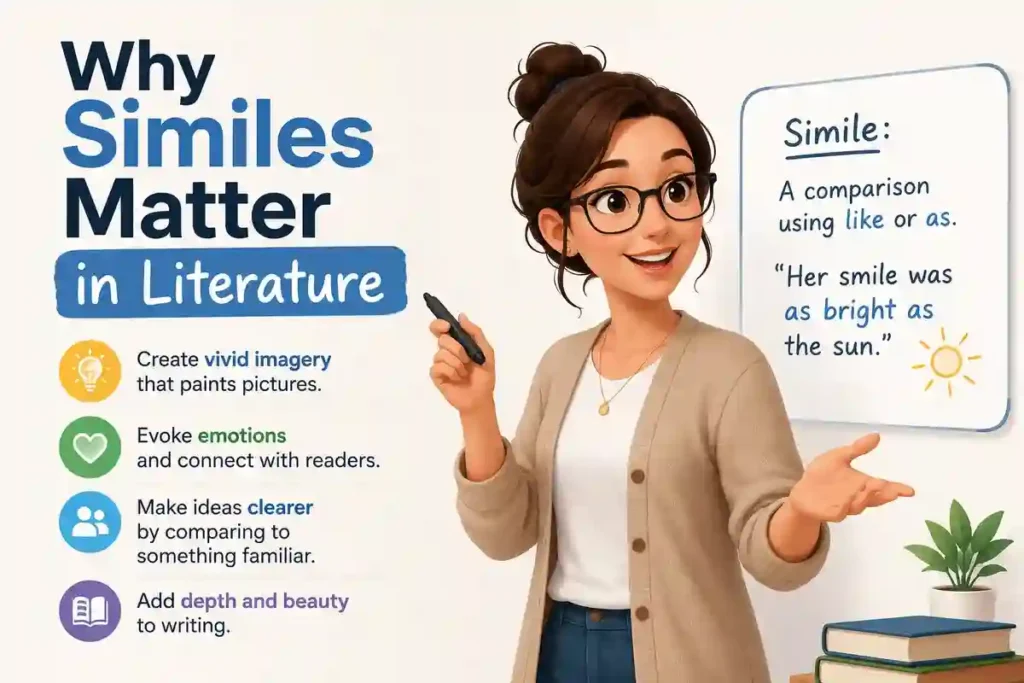
Similes have remained one of the most effective literary devices because they connect unfamiliar ideas with familiar experiences.
Readers do not simply understand the comparison. They experience it.
That emotional connection is why great novels, poems, speeches, and plays continue to rely on similes generation after generation.
From Shakespeare and Homer to contemporary novelists, authors use comparisons to transform ordinary language into memorable storytelling.
Frequently Asked Questions About Similes Examples in Literature
What are similes examples in literature?
Similes examples in literature are comparisons that use like or as to connect two different things. Authors use them to create vivid imagery and help readers understand emotions, characters, and settings more clearly.
Why do authors use similes in literature?
Authors use similes to create strong mental images, add emotion, explain complex ideas, and make descriptions more memorable.
What is the difference between a simile and a metaphor?
A simile compares two things by using like or as. A metaphor makes a direct comparison without using those words.
How can I identify a simile?
Look for a comparison that uses like or as. Then ask if it compares two different things to explain an idea or create imagery.
Are similes only used in poetry?
No. Similes appear in novels, short stories, speeches, children’s books, essays, and everyday conversations.
What are some famous similes examples in literature?
Some well known examples include.
- I wandered lonely as a cloud.
- O my Luve’s like a red red rose.
- Comparisons in Homer’s The Iliad and The Odyssey.
- Numerous comparisons throughout Shakespeare’s plays.
Why are similes important for students?
They improve reading comprehension, build descriptive writing skills, and help students recognize figurative language in literature.
Can a simile be one sentence?
Yes. Many effective similes are short and direct. A single comparison can create a powerful image.
How do similes improve creative writing?
They help readers visualize scenes, connect emotionally with characters, and remember important moments in a story.
What makes a good simile?
A good simile compares two different things with a clear shared quality. It feels natural, supports the meaning, and creates a memorable image.
Conclusion
Similes examples in literature continue to shape some of the world’s greatest poems, novels, and plays because they make language more vivid and meaningful. A thoughtful comparison helps readers picture a scene, understand a character, or connect with an emotion in just a few words.
From classic works by Homer, Shakespeare, Robert Burns, and William Wordsworth to modern fiction, similes remain one of the most valuable literary devices. They turn simple descriptions into memorable experiences that stay with readers long after the final page.
The next time you read a poem or novel, look for comparisons that use like or as. You will begin to notice how skilled authors use similes to bring every scene to life.

Founding Editor
Maya spent six years as a copyeditor at a regional newspaper before starting Grammist, which is where the “answer first” format came from: newsroom style guides don’t have room for a preamble.
She writes and reviews most of the word-pair and spelling entries, and has final say on anything that goes out under the Grammist name.